Tariq: Weaving Paisley Artistry Into Modern Typography
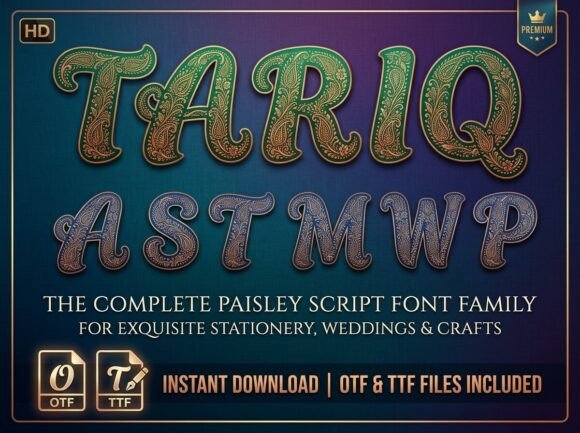
There’s a moment in every designer’s search for the perfect typeface when you stumble upon something that doesn’t just convey words, but tells a story. That’s precisely the experience with Tariq. It’s more than a script font; it’s a carefully crafted design asset that infuses the ornate beauty of traditional paisley patterns into every stroke. Imagine the intricate, flowing lines of classic Eastern textiles translated into a modern, digital form. Each letter in the Tariq font family feels hand-drawn, complete with delicate flourishes and a rich, textured fill that adds a tangible, almost “HD” depth to your canvas. This isn’t a simple handwritten font or a standard serif font—it’s a distinctive premium font that bridges heritage craftsmanship with contemporary design needs.
Understanding Tariq’s personality is key to using it effectively. It exudes a sense of luxury, heritage, and meticulous artistry. The style is ornamental and decorative, making it a natural fit for projects where visual impact and emotional resonance are paramount. Think of it as the typographic equivalent of a bespoke, embroidered piece—it’s meant to be admired. Its appeal lies in this unique fusion of cultural artistry and high-end design, offering a creative font solution for those who want their work to feel both timeless and utterly unique.
Where Tariq Truly Shines: Practical Applications
The true value of a font like Tariq is realized when applied to the right project. Its intricate details make it a standout choice for high-end branding and logo design. For a luxury boutique, artisanal product, or a bespoke service, using Tariq in a logo or monogram immediately communicates exclusivity and craftsmanship. In packaging design, it can transform a simple box or label into a piece of art, making the unboxing experience feel special and intentional. Similarly, for editorial design in premium magazines or lookbooks, Tariq can be used for pull quotes, feature titles, or chapter headings to add a layer of sophisticated visual interest.
For personal projects, its strengths are equally compelling. Tariq is an exceptional choice for luxury wedding invitations, event stationery, and greeting cards. Its ornamental script ensures that an invitation feels like a keepsake. Digital creators can leverage its bold presence in social media graphics for Instagram stories or Pinterest pins to stop the scroll with beautiful, detailed typography. Bloggers and publishers focused on lifestyle, fashion, or culture can use it for their blog headers or digital magazine covers to establish a strong, elegant brand identity. The key is to recognize that Tariq is a display font, designed for headlines and accent text rather than body copy.
Mastering the Art of Using an Ornamental Font
Integrating a font as detailed as Tariq into your design toolkit requires a thoughtful approach. First, always consider readability. Because of its intricate flourishes, Tariq performs best at larger sizes where its details can be fully appreciated. Avoid using it for long paragraphs or small-sized body text. A practical test is to view your design at the intended size—on a phone screen for social media, or printed at the final invitation size—to ensure clarity.
Font pairing is crucial for achieving balance and visual hierarchy. Tariq’s ornate nature means it needs a simpler counterpart to prevent visual clutter. Pair it with a clean, geometric sans serif font for a modern contrast, or a classic, sturdy serif font for a more traditional, cohesive feel. For example, use Tariq for a wedding invitation’s names, and pair it with a light sans serif for the event details. This creates a clear hierarchy where the artistic font makes the main statement, and the supporting font provides legible information. When evaluating the font, explore the full family. Does it include multiple weights or stylistic alternates? These variations offer flexibility for creating nuanced designs within a consistent brand identity.
Finally, always check the commercial licensing. If you’re using Tariq for client work, merchandise, or any commercial project, ensure your license covers that use. Reputable foundries provide clear licensing terms for different scales of use, from small business projects to large corporate campaigns. Investing in the proper license is a mark of professionalism and protects both you and your client. By respecting these practical considerations, you can harness the full potential of Tariq, ensuring your designs are not only beautiful but also functional and professional. It becomes more than just a typeface; it becomes a cornerstone of a memorable and engaging visual language.